
Tourists at Risk of Contracting MERS From Cruel Camel Rides; PETA Issues Travel Advisory
Tourists at Risk of Contracting MERS From Cruel Camel Rides; PETA Issues Travel Advisory
Hong Kong — Amid an outbreak of Middle East respiratory syndrome (MERS) in Saudi Arabia, PETA is issuing an urgent travel advisory warning visitors to the region to avoid all contact with camels, including those who are forced to give rides to humans at tourist sites—for both their own safety and the animals’ well-being. The move follows a warning from Hong Kong’s Centre for Health Protection that any camel-related activities in the Middle East—including riding them or consuming their flesh or milk—risks transmitting the potentially fatal disease, as camels are “known reservoirs” of the virus.
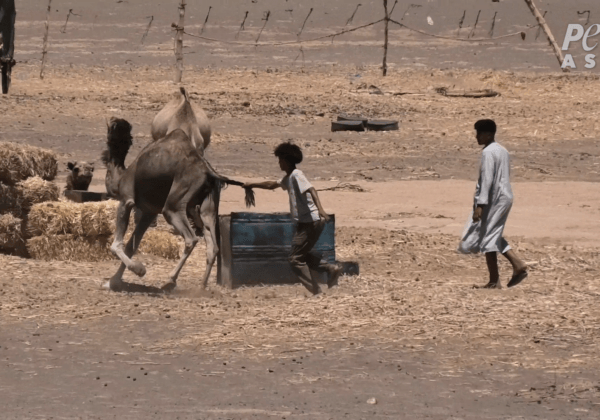
In addition to the danger posed to humans, PETA investigations have documented that camels used for rides and photo ops at tourist sites like the pyramids of Giza are violently and routinely beaten by their handlers. At Egypt’s notorious Birqash Camel Market, a dead camel was tied by their feet to a truck and dragged through the streets and another was found dead in the middle of a road with their throat slashed open. When camels were no longer considered useful, they were often hauled to a slaughterhouse, where their throats were slit while they were still conscious.
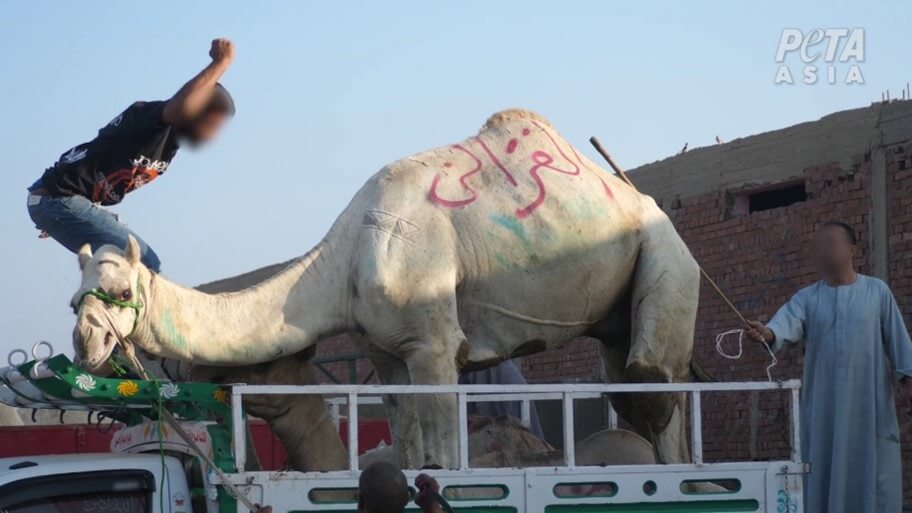
Camels are violently and routinely beaten by their handlers in the Birqash Camel Market Egypt.
Photo: PETA
“Cruelty and contagions run rampant at these shameful attractions, where camels are mercilessly beaten, worked until they drop, and violently killed in filthy slaughterhouses,” says PETA Senior Vice President Jason Baker. “PETA’s urgent travel advisory is meant to protect both tourists and the camels who are exploited for rides from suffering and dying prematurely.”
#